Most electric scooter riders are using the wrong tire pressure — and they don’t even realize it.
That one small mistake can reduce your range, wear out your tires faster, and even increase the risk of flats.
In this guide, you’ll learn what the correct tire pressure actually is — and how to get it right.
Watch the Full Video
What Is the Correct Tire Pressure?
- 40 to 50 PSI (≈ 2.8 to 3.5 bar)
This is the typical range for most commuter electric scooters.
To find the exact number for your model:
- Check the tire sidewall
- Or look in the user manual
Key takeaway: Even small pressure differences can noticeably affect performance.
Why Most People Get It Wrong
There are two common issues:
- Riding with underinflated tires
- Not checking pressure at all
Scooter tires naturally lose air over time — even without punctures.
If you haven’t checked your tire pressure in weeks, it’s probably already too low.
What Happens If Tire Pressure Is Too Low
This is the most common problem.
- The motor works harder
- Battery drains faster
- Range decreases
It also increases the risk of:
- Pinch flats
- Faster tire wear
- Rim damage on bumps
Your scooter will also feel slower and less responsive.
What Happens If Tire Pressure Is Too High
Too much pressure causes a different set of problems:
- Reduced traction
- Harsher ride
- More vibration
You’ll feel bumps more sharply, and grip — especially on wet surfaces — can decrease.
More pressure isn’t always better — balance matters.
How Tire Pressure Affects Range
Low tire pressure can reduce your range by 10–20% or more.
That’s a significant loss — caused by something most riders ignore.
If your scooter feels like it’s losing range, this should be one of the first things you check.
How Often You Should Check Tire Pressure
A simple rule:
- Check at least once per week if you ride regularly
Also check:
- Before longer rides
- If range suddenly drops
- If the scooter feels sluggish
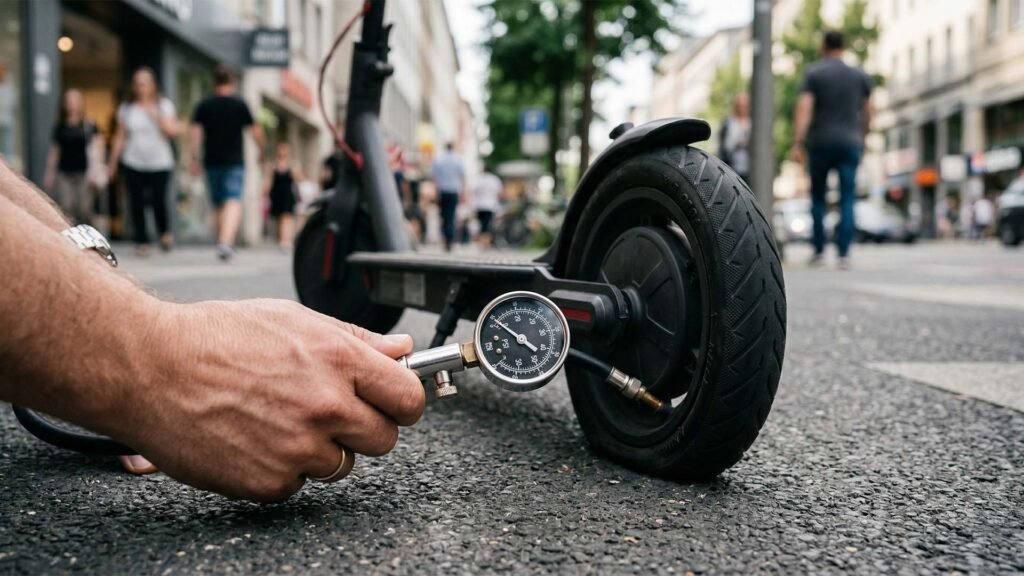
How to Check and Inflate Properly
You don’t need anything complicated.
A basic tire pressure gauge or a pump with a built-in gauge is enough.
Steps:
- Check current PSI
- Inflate to the recommended range
- Use actual numbers — don’t guess
Because scooter tires are small, they lose air quickly when attaching a pump.
Work quickly and recheck if needed.
Finding the Right Balance
For most riders:
- Closer to 40 PSI → softer ride
- Closer to 50 PSI → better efficiency and range
Stay within the recommended range for safety.
Surprisingly, having the tire pressure in the correct range is one of the easiest ways to make your electric scooter faster.
Quick Summary
- Keep tire pressure between 40–50 PSI
- Check at least once per week
- Avoid riding with low pressure
- Don’t overinflate
- Adjust based on comfort vs efficiency
Small habit — big impact on performance, safety, and range.

The founder of Electric Wheelers and the creator behind its YouTube channel.
He has spent the past 5+ years riding, testing, and figuring out electric scooters and e-bikes in real-world conditions — not just reading spec sheets.
Instead of chasing trends, he focuses on practical questions:
What actually works? What breaks? And what is worth your money?
Most of the content is based on personal experience, with the goal of helping others avoid mistakes and make better decisions.